How Process Control Drives Reliability in Precision Manufacturing
Key Takeaways
Consistent monitoring of machining conditions allows manufacturers to detect and correct deviations early, preventing defects from affecting downstream production.
Interpreting machine and inspection data enables precise adjustments that maintain dimensional accuracy without disrupting throughput.
Coordinated control across multi-axis operations ensures complex components are produced with stable tolerances and surface quality.
Continuous validation through capability tracking and inspection systems supports repeatable outcomes and long-term production stability.
Introduction
In high-precision industries, reliability is not achieved by chance. It is the result of controlled, repeatable processes that consistently deliver components within tight tolerances. This is where process control in manufacturing becomes essential. By combining data-driven monitoring, advanced machining systems, and engineering expertise, manufacturers in Singapore’s precision engineering sector can ensure stable performance in complex production environments. For industries such as aerospace, medical devices, and electronics, this consistency directly supports product performance, regulatory compliance, and long-term operational reliability.
Establishing Process Stability Through Data and Monitoring
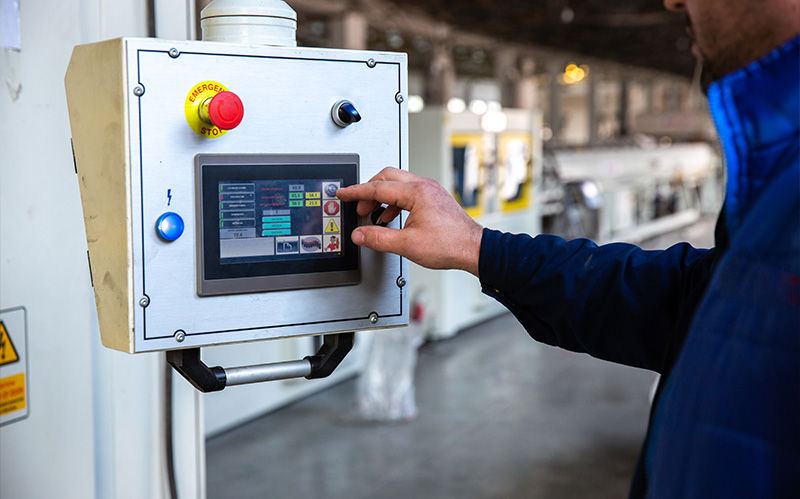
Reliable output begins with stable machining conditions, and this is achieved through process control in manufacturing that is grounded in real-time data collection. Modern facilities deploy sensors to monitor spindle speed, temperature, vibration, and tool wear, allowing engineers to detect subtle variations before they escalate. Using statistical process control (SPC), production teams can identify trends and deviations early, ensuring that machining conditions remain within defined control limits. In Singapore, where manufacturers support global supply chains, this level of control is critical for maintaining consistency across high-volume production runs.
Key Parameters That Influence Process Stability
To maintain stable machining conditions, it is necessary to understand which variables directly affect process performance and output consistency. Temperature fluctuations can influence material behaviour and dimensional accuracy, while inconsistent spindle speeds or feed rates may affect surface finish and tolerance control. Tool wear must also be monitored closely, as gradual degradation introduces variation over time. Machine vibration and alignment further determine how consistently cutting forces are applied, particularly in high-precision environments where stability is essential.
These variables must be controlled together to maintain stable and predictable machining performance:
Temperature control and thermal consistency
Spindle speed and feed rate stability
Tool wear progression and lifecycle tracking
Machine vibration and alignment integrity
Responding to Deviations Before Defects Occur
When monitored parameters exceed established control limits, timely intervention is required to prevent defects from propagating into subsequent production cycles. Engineers assess whether deviations stem from tool wear, environmental changes, or material inconsistencies before applying targeted corrective actions. As a result, these adjustments restore process stability while maintaining throughput and dimensional accuracy.
Recalibration of machine settings
Tool replacement or adjustment
Material batch verification
Interpreting Data for Real-World Precision
While automation plays a key role, effective process control in manufacturing depends on how accurately engineers interpret the data generated by machines and inspection systems. CNC process monitoring provides continuous feedback, but human expertise is required to determine whether a variation is acceptable or indicative of a deeper issue. Engineers analyse control charts alongside inspection data, including results obtained through CMM measurement services, to assess dimensional accuracy and consistency.
Translating Machine and Inspection Data into Action
To ensure accurate outcomes, engineers must convert raw data into actionable insights that directly support machining performance. This involves distinguishing between normal process variation and signals that indicate potential instability. By correlating machine data with inspection results, adjustments can be applied with precision, ensuring that each intervention contributes to consistent output without introducing unnecessary process disruption.
Applying Engineering Judgement to Interpret Process Signals
Interpreting process data requires careful evaluation beyond automated alerts, as engineers must determine whether a signal reflects acceptable variation or a developing issue. By applying engineering judgement to control charts and inspection trends, decisions can be made with clarity, ensuring that corrective actions remain proportionate and effective.
Reducing Variation Across Multi-Axis Operations
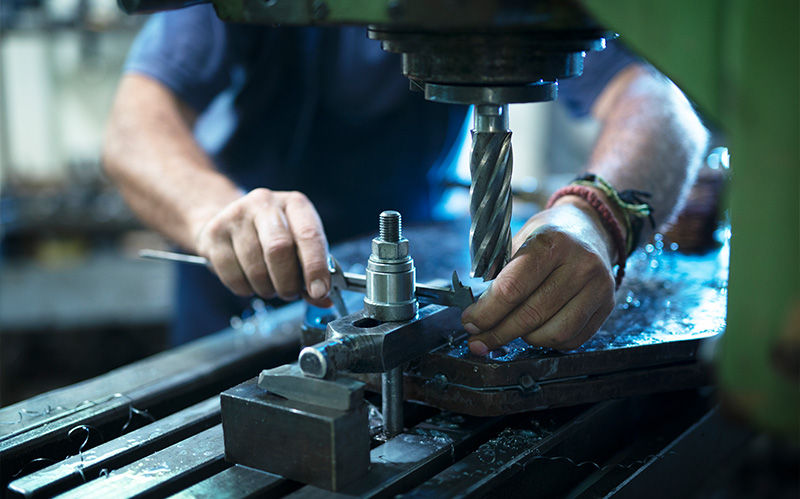
Complex geometries often require multi-axis machining, where synchronisation between movements is critical. In these environments, controlled machining systems ensure coordinated execution across all axes, allowing every axis, feed rate, and cutting parameter to operate in alignment. By integrating real-time monitoring with machine control systems, manufacturers can maintain tight tolerances even in intricate components. This is particularly critical in sectors such as aerospace and medical equipment, where consistency directly affects performance.
Coordinating Axes and Cutting Parameters in Complex Geometries
Achieving consistency in multi-axis machining depends on precise coordination between machine movements and cutting parameters. Each axis must operate in alignment to maintain the intended geometry, especially when producing components with complex contours. Continuous monitoring ensures that cutting forces remain stable, supporting both dimensional accuracy and surface quality.
Maintaining Consistency Across Extended Multi-Axis Production Cycles
Sustaining stability over extended production cycles requires ongoing verification that machining parameters remain within defined limits. Many precision engineering companies in Singapore apply continuous monitoring to detect performance drift over time. This maintains consistency across batches, preventing gradual variation from compromising component integrity.
Ensuring Long-Term Reliability Through Continuous Validation
Consistency over time requires ongoing validation, not just initial setup. Through process control in manufacturing, each stage of production is monitored and verified using structured methodologies such as process capability analysis. Engineers regularly review Cp and Cpk values to confirm that processes remain capable of meeting specifications. These insights, supported by inspection data and trend analysis, provide early visibility into performance shifts, allowing targeted adjustments before output is impacted.
Measuring Process Capability Over Time
To maintain long-term reliability, manufacturers must continuously evaluate whether processes remain within acceptable capability limits. By analysing Cp and Cpk values over time, engineers can determine whether production consistently meets tolerance requirements. This ongoing assessment provides a clear indication of process stability and highlights areas requiring adjustment.
Triggering Corrective Actions from Capability Signals
When capability indicators suggest declining performance, corrective actions must be implemented promptly to restore stability. These actions are guided by data and aligned with production requirements, ensuring that adjustments remain controlled and effective. For companies providing contract manufacturing in Singapore, this approach supports consistent quality across repeated production runs while maintaining operational efficiency.
Equipment maintenance and recalibration
Parameter fine-tuning
Process revalidation
How Disk Precision Group Upholds Process Reliability
At Disk Precision Group, process control in manufacturing is embedded into every stage of production, from initial setup to final inspection. Its engineering teams integrate SPC systems with advanced CNC technologies, apply structured monitoring practices, and utilise calibrated metrology systems to verify results. This disciplined approach ensures that each component meets the precision and consistency required by industries such as semiconductor, automotive, and medical manufacturing, while maintaining reliability across production cycles.
Conclusion
Reliability in precision manufacturing is built on stable, controlled processes that consistently deliver precise outcomes. By combining statistical monitoring, real-time machine feedback, and experienced engineering judgement, manufacturers can reduce variability and produce predictable outcomes. Without structured control, minor variations can accumulate into defects that compromise component performance and production reliability. In Singapore’s advanced manufacturing environment, this capability supports industries that depend on precision, performance, and long-term reliability across every component produced.
For businesses evaluating their manufacturing processes or planning new component production, engaging with Disk Precision Group provides access to structured process control systems, real-time machining oversight, and validated workflows designed to maintain consistency across every production cycle. Their engineering-led approach supports the development of stable, repeatable processes that drive long-term reliability in high-precision manufacturing.
Comments