What Is the Difference Between CNC Milling and Turning in Precision Engineering
Key Takeaways
Milling and turning differ primarily in how motion is generated, which directly influences the types of geometries each process can produce with stable accuracy.
Milling is best suited for complex, multi-surface components, while turning delivers superior concentric control for cylindrical or rotationally symmetrical parts.
Tolerance capability, surface integrity, material behaviour, and production volume must all be evaluated before selecting the most suitable machining approach.
Integrating both processes within a coordinated workflow improves alignment control, reduces handling deviation, and supports consistent performance in high-precision industrial applications.
Introduction
In modern manufacturing, precision is measured in microns, and consistency defines competitiveness. For engineering leaders across Singapore’s aerospace, automotive, medical, and electronics sectors, understanding ‘what is the difference between CNC milling and turning’ is essential when specifying components, qualifying suppliers, or refining production strategies. While both processes fall under computer numerical control machining, their motion control, tooling configuration, and application focus differ in ways that directly influence tolerance stability, surface finish, and overall production efficiency.
Distinct Machining Motions, Unified Purpose
The primary distinction lies in how movement is generated during material removal. Although both processes operate within digitally controlled environments, the source of rotation determines how geometry is produced and how dimensional control is maintained.
Tool Rotation vs Workpiece Rotation
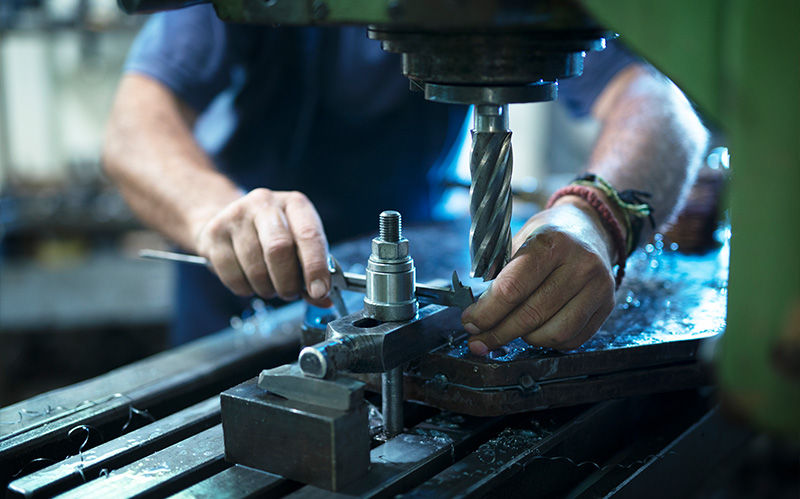
To clarify what is the difference between CNC milling and turning, it is necessary to examine the underlying mechanics of motion. In CNC milling, the cutting tool rotates at controlled speeds while the workpiece remains fixed in position. This configuration allows the tool to approach the material from multiple axes, making it suitable for flat planes, cavities, slots, and complex contours.
In CNC turning, the workpiece rotates on a spindle while a stationary cutting tool removes material along the external or internal diameter. Because the component spins around a central axis, roundness and geometric alignment can be tightly regulated. This rotational control is critical for components such as shafts, sleeves, injector bodies, and spindle parts where geometric symmetry directly affects performance.
Tolerance Capabilities in High-Precision Environments
Beyond movement, tolerance behaviour differentiates the two processes in measurable ways. In high-precision environments, CNC milling can achieve tolerances within a few microns, for example, around ±0.005 mm, depending on feature geometry, fixturing rigidity, machine calibration, and overall process control. CNC turning can maintain tight concentricity control, for example, around ±0.002 mm on cylindrical features, particularly when spindle stability, tool wear management, and thermal conditions are carefully monitored.
For sectors such as hard disk drive manufacturing or precision automotive injection systems, these tolerance ranges are functional requirements. A practical CNC machining comparison must therefore consider not only geometry, but also how each process controls flatness, runout, and positional stability throughout repeated production cycles.
CNC Milling: Complex Geometry with Multi-Axis Control

Milling is typically selected when components require multiple intersecting surfaces or detailed features that must align within strict dimensional limits. Its advantage lies in geometric flexibility and process consolidation.
Multi-Axis Capability and Setup Reduction
Advanced multi-axis CNC manufacturing enables machining across several planes within a single setup. Reducing repositioning helps preserve datum alignment and minimises cumulative deviation between features.
For aerospace brackets, electronic housings, and medical frames, maintaining alignment between critical features is essential. By consolidating operations into one controlled cycle, multi-axis milling supports repeatability while improving cycle-time efficiency. Tool-path optimisation and rigid fixturing further enhance feature-to-feature accuracy across production runs. However, because multiple cutting edges engage the material intermittently along complex tool paths, milling cycle times can increase compared to purely cylindrical machining. The trade-off lies in geometric flexibility rather than raw speed.
Material Considerations in Milling Applications
Material behaviour directly influences milling stability and surface integrity. Aluminium alloys offer favourable machinability, while stainless steel and titanium require tighter control of cutting parameters to manage heat and tool wear.
Organisations engaging specialised CNC milling services often prioritise material-specific tooling strategies to sustain accuracy across varying batch sizes. When properly managed, milling delivers consistent geometry and surface quality suitable for high-value industrial applications.
Early evaluation of manufacturability, including tool accessibility and clamping strategy, further reduces the risk of secondary rework or tolerance drift in complex builds.
CNC Turning: Speed and Concentric Precision

Turning is commonly used for components defined by rotational symmetry. Its efficiency and geometric control make it fundamental to industries where cylindrical accuracy is critical.
Concentricity and Surface Integrity
Concentric control becomes a defining factor when comparing the two processes. Because the workpiece rotates around a fixed axis, turning is inherently well-suited for controlling diameter and roundness when machine alignment is properly maintained.
Surface finishes as fine as Ra 0.8 µm are commonly achievable, supporting sealing interfaces and bearing applications in automotive, oil and gas, and industrial assemblies. This level of finish helps reduce friction and enhances operational reliability.
The continuous cutting engagement typical in turning enables higher material removal rates for round components, thereby shortening cycle times in high-volume production environments.
Automation and High-Volume Efficiency
Turning centres frequently incorporate bar-feed automation, allowing continuous machining with minimal operator intervention. This configuration supports consistent output across high-volume production while maintaining dimensional stability.
Manufacturers requiring repeatable cylindrical components often rely on a dedicated CNC turning service to ensure efficiency without compromising tolerance requirements.
For large production batches, turning frequently offers cost advantages due to reduced setup complexity and optimised spindle utilisation.
Choosing Between Milling and Turning in Precision Engineering
Selecting the appropriate method requires assessing the geometry, tolerance requirements, and production scale. The decision must align with design intent and manufacturing practicality.
Geometry and Tolerance Requirements
Understanding ‘what is the difference between CNC milling and turning’ begins with part geometry. Milling is generally suited to prismatic or irregular components with multiple faces and cavities. Turning is more appropriate for cylindrical parts requiring precise rotational accuracy.
For many precision engineering components, both symmetrical and complex features are present within a single design. Engineers must assess how process sequencing affects datum stability, feature alignment, and overall tolerance stack-up.
Production volume, surface finish expectations, and inspection requirements should also be considered early in the design phase to avoid unnecessary process transfers.
When Hybrid Mill-Turn Systems Make Sense
In applications combining rotational and multi-surface features, integrated mill-turn systems provide a practical solution. Performing both operations within a single controlled environment reduces intermediate handling and preserves consistency across features.
Manufacturers producing advanced precision CNC-machined parts benefit from this integrated approach, particularly in aerospace fittings and medical assemblies where dimensional consistency is non-negotiable.
Hybrid systems are especially effective when tight positional tolerances must be maintained between cylindrical and prismatic features without re-clamping the workpiece.
Integrating Both Processes for Complete Machining Solutions
In advanced manufacturing environments, the question of what is the difference between CNC milling and turning extends beyond individual operations to system integration. Many components require both methods in sequence to achieve the final geometry and functional requirements.
A well-planned machining strategy aligns datum selection, inspection checkpoints, and tool sequencing from the outset. This reduces cumulative deviation and improves process predictability across production batches. Automated machining platforms and hybrid centres now enable seamless transitions between prismatic and rotational features, strengthening overall build accuracy across complex components.
Precision at Scale Through Regional Manufacturing Excellence
Across today’s global precision engineering landscape, consistent execution across materials and production volumes is critical to long-term supplier qualification and operational reliability. Disk Precision Group operates fully integrated CNC milling and turning capabilities within a standardised manufacturing framework across its production facilities in Malaysia and Thailand.
Certified to ISO 9001 and ISO 14001 standards and supported by advanced CMM inspection systems, the company maintains harmonised machining parameters and metrology controls to ensure repeatability, accuracy, and process consistency across diverse materials, complex geometries, and varying production volumes. This regional manufacturing network enables Disk Precision Group to deliver high-quality precision components to international OEMs with efficiency, scalability, and dependable lead times.
For Singapore-based OEMs across HDD, automotive, aerospace, medical, and industrial sectors, understanding ‘what is the difference between CNC milling and turning’ supports clearer technical evaluation and better production planning. By leveraging advanced multi-axis systems and stringent quality assurance protocols, manufacturers can achieve stable tolerances, consistent surface integrity, and reliable performance across demanding applications.
Contact Disk Precision Group to review your component requirements and determine the most suitable CNC milling and turning strategy for your application.


Comments