Production Risks in Precision Engineering: How Process Discipline Prevents Costly Manufacturing Issues
อัปเดตเมื่อ 6 พ.ค.

Why Production Risks Persist Even in Highly Capable Precision Environments
Precision engineering performance is often evaluated through measurable indicators such as machine capability, tolerance achievement, and inspection outcomes. Modern facilities operating in Thailand’s advanced manufacturing sectors frequently invest in high-performance equipment and skilled technical teams to ensure that complex components meet demanding specifications. Despite these capabilities, production risks can still arise during ongoing manufacturing operations, even when machines and processes appear technically capable.
In this context, production risks are issues that arise during production rather than during design or prototyping stages. These may include quality escapes, unplanned rework, schedule disruptions, yield loss, or cost overruns that develop gradually within a running manufacturing programme. Such problems rarely originate from a single machining event. Instead, they tend to result from small decisions and process conditions that interact over time across multiple production cycles.
One reason these risks persist is that manufacturing outcomes are shaped by interconnected operational decisions that are repeated throughout the production lifecycle. Small inconsistencies introduced early in a process may remain unnoticed during initial inspections but can compound quietly across batches and programmes. As production volumes increase, these accumulated deviations may begin to affect downstream assembly, inspection consistency, or product performance.
In many cases, the effects only become visible at later stages, such as internal audits, final system integration, or customer usage environments. By this point, corrective actions often require additional investigation, rework, or production adjustments, which can significantly increase operational costs. The timing of these discoveries is particularly critical because late-stage corrections typically carry higher financial and operational implications than early-stage process adjustments.
For Thailand, which plays a significant role as a regional manufacturing base supporting global OEM supply chains, maintaining consistent production outcomes is especially important. Industries such as automotive, electronics, and precision components depend heavily on reliable manufacturing execution. Instability that arises late in the production cycle can disrupt delivery commitments, strain supply chain coordination, and damage long-term supplier trust.
Illustrative Scenario (Non-Client-Specific)
Consider a situation in which a minor early decision is made during process setup, such as informally prioritising one datum reference over another without documenting the rationale. During first-article approval, the part appears compliant with dimensional requirements, and the decision seems inconsequential at that stage.
As production scales and the same assumption is repeated across multiple setups and programmes, the undocumented approach becomes embedded within the manufacturing workflow. Over time, different teams have consistently applied this practice without revisiting the original intent.
Several months later, a drawing revision or a downstream assembly tolerance stack reveals a functional misalignment. Investigation identifies dimensional shifts that require rework, additional inspection, and adjustments to existing machining setups. Production schedules may be disrupted while engineering teams analyse the underlying issue.
In this case, the root cause does not lie in machining capability or equipment limitations. Instead, it traces back to an early undocumented process decision that gradually propagated across the production environment, illustrating how seemingly small factors can influence long-term manufacturing outcomes.
Key Takeaways
Operational issues in precision manufacturing often arise gradually from small inconsistencies in engineering interpretation and execution rather than from a single technical failure.
Early validation stages confirm feasibility but do not guarantee that manufacturing performance will remain stable over extended production cycles.
Consistent documentation and structured decision-making help maintain alignment between engineering intent and day-to-day production activities.
Sustained process discipline supports long-term manufacturing reliability by preventing small operational variations from compounding over time.
Understanding Where Production Risks Take Shape in Precision Engineering
Even in highly capable precision manufacturing environments, operational challenges rarely emerge from a single technical failure. Instead, they tend to develop gradually through a combination of engineering interpretation, operational variability, and evolving production conditions. Understanding where these issues originate is essential to preventing them from affecting manufacturing performance.

Engineering Interpretation as the First Point of Risk Accumulation
One of the earliest stages where operational inconsistencies can begin to form is during the interpretation of engineering drawings. While design documentation defines a component’s functional requirements, translating those requirements into practical manufacturing decisions requires careful judgment and consistent engineering logic.
Drawings Represent Design Intent but Not Complete Execution Logic
Engineering drawings are fundamental communication tools that define functional requirements, including dimensions, tolerances, datums, and surface conditions. However, they rarely define all the operational decisions needed to maintain a stable manufacturing process. In precision manufacturing environments, teams must translate design intent into practical machining strategies, inspection sequences, and setup methods. During this translation stage, production risks can begin to accumulate when interpretation decisions are made without a consistent reference framework.
Although tolerances and datums provide technical boundaries, they often require contextual judgment when applied to real machining conditions. Tool selection, datum prioritisation, and inspection referencing may vary depending on the engineering interpretation used by different teams. When these decisions are not formally documented, subtle differences in execution logic may develop across programmes. This is why many manufacturers emphasise structured engineering processes to ensure that design intent is translated into consistent manufacturing practices.
Early outputs can still meet the specification even when the interpretation logic differs. During the first article inspection, components may fall within dimensional limits and therefore appear compliant. However, these early results do not always reveal underlying inconsistencies in how manufacturing decisions were made. When such differences persist over time, hidden operational issues may remain within the process until conditions change.
Informal Assumptions and Their Long-Term Consequences
In many precision operations, assumptions around datum hierarchy, functional priority, or inspection reference points are formed during early engineering discussions. These decisions may seem reasonable in context, but are not always captured in formal documentation. Over time, these informal assumptions become embedded within machine setups, machining programmes, and inspection routines.
When conditions remain stable, these embedded decisions may continue to produce acceptable outputs. However, when new staff join the programme, production volumes increase, or equipment changes occur, the absence of documented logic can create uncertainty. Differences in interpretation can gradually introduce inconsistencies, increasing the likelihood of production risks emerging across batches.
How Interpretation Risk Appears in Live Production
Interpretation-related issues often appear during live production rather than during initial engineering review. For example, manufacturers may observe dimensional inconsistencies between batches even though the drawing has not changed. Investigation may reveal that different teams have applied slightly different referencing logic or setup methods when machining the same component.
Such inconsistencies may also surface during downstream assembly or functional testing, where accumulated tolerance interactions become more visible. In regulated industries such as automotive or aerospace, internal or external audits may also identify undocumented decision logic that was never formally validated. These situations highlight how differences in interpretation can gradually develop into operational issues if not addressed early.
Why Interpretation Risk Is Often Detected Late
One reason interpretation-related issues remain undetected for long periods is that early production success tends to reinforce confidence in the initial approach. When the first batches perform well, teams may assume that the underlying process logic is sound and therefore do not revisit earlier assumptions.
In addition, limited production volumes or experienced personnel can compensate for gaps in documentation. Skilled operators may make adjustments based on experience, effectively stabilising the process in the short term. However, as programmes expand or personnel change, these informal adjustments may no longer be applied consistently. At that stage, previously hidden inconsistencies can surface as measurable operational issues that affect output reliability.
Variability as a Compounding Production Risk Over Time and Volume
Beyond engineering interpretation, operational variability is another area where manufacturing outcomes can slowly diverge from initial expectations. Even when processes are initiated under controlled conditions, small differences in execution across time, personnel, and production environments can affect long-term stability.
First Article Approval Provides Only Momentary Validation
In precision manufacturing, initial article approval is a crucial milestone because it confirms that a component can be manufactured to the required specifications under specified conditions. However, this validation represents only a snapshot of performance at a single point in time. It does not necessarily confirm that the process will remain stable across extended production periods.
In environments serving global OEM supply chains, production may span multiple shifts, different operators, and overlapping programmes. Under these conditions, even small differences in execution can gradually influence process performance. Without strong engineering process control, these variations may accumulate and eventually contribute to operational issues that are not immediately visible during initial validation.
Common Sources of Variability in Precision Operations
Variability often enters manufacturing processes through everyday operational decisions. Differences in setup interpretation, tool wear management, or offset adjustments may appear minor when viewed individually. When such decisions are regularly made during production cycles, they can gradually affect dimensional consistency.
High-mix production environments further increase this challenge. Frequent programme switching between components can introduce subtle setup differences, especially when machines handle parts with different geometries or tolerance requirements. In these situations, maintaining manufacturing process stability is essential to prevent small operational variations from developing into broader operational inconsistencies.
In practical machining environments, variability can also originate from factors such as tool wear progression, slight deviations in clamping force, thermal expansion during long production runs, or differences in coolant delivery conditions. Each of these factors may produce small dimensional shifts that remain within tolerance individually but accumulate across extended production cycles. When these changes are not monitored within a structured engineering framework, the gradual drift can increase the likelihood of production risks emerging in later stages of the manufacturing programme.
How Variability Appears in Operational Data
Operational variability often develops gradually rather than through a single disruptive event. Engineers may observe small dimensional drift that remains within tolerance but begins to influence assembly fit or functional performance. Because each deviation appears acceptable, the overall trend may go unnoticed during routine inspection.
Another common indicator is an increasing frequency of manual adjustments or process corrections. Operators may modify offsets or parameters more frequently, even though no single root cause has been identified. Occasional rework or scrap may also occur sporadically across batches, making it appear as isolated incidents rather than symptoms of a systemic issue.
Additional operational indicators can include shortened tool life, increased reliance on in-process dimensional adjustments, or growing variation between shifts operating the same programme. When engineers observe these patterns repeatedly across production runs, they may indicate that the underlying process conditions are no longer fully aligned with the original engineering intent. Over time, these patterns can collectively contribute to measurable production risks in the production environment.

Why Variability Is Often Misdiagnosed
Variability-related issues are frequently addressed through short-term corrections rather than structural improvements. For example, individual defects may be corrected through local adjustments without examining the broader pattern of process behaviour. While these actions temporarily restore output, they do not always resolve the underlying instability.
Another challenge is that root causes may occur at multiple stages of the production process. Setup decisions, tool condition, programme sequencing, and operator interpretation may all contribute incrementally.
Because these factors interact across multiple production stages, a structured approach to preventing variability in precision manufacturing is often necessary to identify the true source of instability. Without such analysis, corrective actions may focus only on symptoms rather than underlying causes. This allows variability to persist within the system until it eventually appears as more visible operational issues in later production phases.
Engineering Changes as Accelerators of Existing Production Risks
While variability often develops gradually through repeated execution, engineering changes can introduce sudden shifts that expose previously hidden weaknesses in a manufacturing process. Even minor drawing revisions or specification updates can affect existing assumptions within the production workflow.
Change Is a Constant in Long-Running Precision Programmes
In automotive, electronics, and aerospace industries, continuous design evolution is anticipated throughout the product lifecycle. Functional improvements, compliance updates, and customer-driven refinements frequently require changes to drawings or specifications. Each revision requires engineering teams to reassess machining approaches, inspection methods, and process parameters.
However, every change also interacts with existing production practices that have developed over time. When documentation is incomplete or assumptions remain embedded within setups, these interactions can amplify previously unnoticed production risks.
How Uncontrolled Change Creates Parallel Execution Paths
When engineering updates are introduced without clear alignment across teams, legacy practices may persist alongside updated requirements. Some setups may follow the revised drawing intent, while others continue to apply earlier assumptions that were never formally replaced.
Documentation delays can also contribute to this situation. If programme updates, inspection plans, and setup instructions are not synchronised across departments, different teams may unknowingly operate with different interpretations of the current requirement. In such cases, maintaining operational consistency in production becomes difficult, increasing the probability that latent operational issues will appear during ongoing manufacturing.
Operational Signals That Indicate Change-Related Risk
Several operational signals may suggest that change-related issues are developing within a production programme. For example, manufacturers may observe inconsistent results after a drawing revision even though the machining equipment and tooling remain unchanged.
Conflicting interpretations observed during engineering reviews or audits may indicate that different teams are applying inconsistent assumptions. In some cases, misalignment is only discovered when assembly teams identify functional issues or when inspection results begin to diverge from expected patterns.
Why Change-Related Risks Are Often Costly
When engineering changes interact with existing assumptions, the resulting issues often appear late in the production process. By this stage, significant value may already have been added through machining, finishing, or assembly operations.
Corrective actions may therefore require rework, schedule adjustments, or extended investigation. Root cause analysis can also become more complex when multiple revisions and historical process decisions must be evaluated together. These conditions demonstrate how engineering changes can accelerate existing production risks and increase operational impact when discovered late in the manufacturing cycle.
In high-precision environments that manufacture complex fabricated metal products, disciplined documentation and clear process alignment are essential to maintain consistent outcomes. Whether the process involves advanced turning operations, multi-axis milling, or integrated precision CNC machining, clear execution logic and structured communication remain critical to sustaining stable production performance.
How Process Discipline Stabilises Precision Manufacturing Outcomes
To maintain reliable performance in complex manufacturing environments, organisations must go beyond equipment capability and inspection results. A structured approach to decision-making and execution helps ensure that engineering intent is applied consistently throughout the production lifecycle.
Process Discipline as a Structural Control System
To maintain stability in precision manufacturing, one of the most effective approaches is to establish clear systems that guide decision-making and implementation. These systems help align engineering intent with day-to-day production activities across teams and programmes.
Process Discipline in Precision Engineering Contexts
In precision manufacturing environments, process discipline defines how engineering and operational decisions are made, documented, and executed throughout the production lifecycle. Rather than focusing solely on the sequence of tasks, disciplined frameworks clarify the logic behind key decisions such as setup references, inspection points, and machining strategy. This structured approach reduces ambiguity and helps organisations manage complex programmes where multiple teams interact across different production stages. When these systems are absent or inconsistently applied, production risks can gradually emerge as informal practices replace documented engineering logic.
Process discipline also provides a stable operational framework that reduces reliance on individual experience or memory. In high-mix production environments, where programmes frequently change, and multiple part types may run on the same machines, consistent decision structures help maintain clarity across teams. This stability is especially important in Thailand’s precision manufacturing sector. Here, suppliers frequently support global OEM supply chains that impose demanding technical specifications and tight delivery schedules. Without such discipline, operational inconsistencies may accumulate and contribute to avoidable manufacturing issues over time.
Enabling Flexibility Without Instability
A common misconception is that strict processes reduce operational flexibility. In reality, disciplined frameworks enable controlled adaptation when new conditions arise. When engineering logic is clearly documented, teams can introduce adjustments in a structured manner rather than relying on informal workarounds.
Changes to machining strategies, tooling approaches, or inspection methods can therefore be implemented without disrupting existing production stability. In high-mix and multi-programme environments, this balance between adaptability and consistency is essential for maintaining reliable output. When change occurs within a structured system, the likelihood of hidden operational issues developing during programme transitions is significantly reduced.
Decision Consistency as the Core Risk Reduction Mechanism
A key factor in maintaining stable manufacturing outcomes is ensuring that engineering decisions are applied consistently across teams and production phases. When decision logic is standardised and clearly communicated, organisations are better able to minimise interpretation differences that could otherwise affect operational performance.
Standardising Engineering Judgement
One of the most effective ways to reduce operational uncertainty is to ensure that similar technical challenges are addressed using consistent engineering logic. Standardising how decisions are evaluated and recorded allows engineering teams to apply the same reasoning across different programmes and production phases.
When decision rationale is made explicit, it becomes easier for teams to understand why certain machining approaches or inspection strategies were chosen. This shared understanding reduces interpretation differences between engineers, operators, and quality personnel. As a result, variability in outcomes across time and teams can be significantly reduced, lowering the likelihood that hidden operational issues will emerge during extended production runs.
Documentation as a Carrier of Engineering Intent
Effective documentation serves a broader purpose than simply listing instructions. It preserves the engineering context for operational decisions, enabling future teams to understand the reasoning behind specific process choices. When documentation captures intent as well as execution steps, it becomes a critical tool for maintaining consistency throughout long production lifecycles.
This approach also supports continuity during personnel transitions. As experienced engineers move between programmes or new staff join production teams, documented decision logic allows knowledge to transfer without distortion. Over time, these living records help maintain programme stability and reduce the chance that undocumented assumptions will reintroduce operational issues into established manufacturing processes.
Sustaining Process Discipline Across Long Production Lifecycles
Maintaining stability in precision manufacturing requires more than establishing structured processes at the start of a programme. Over time, organisations must ensure these practices are followed and reinforced as production environments evolve.
Why Discipline Can Erode Over Time
Even well-structured production systems can gradually lose discipline if they are not actively maintained. Familiarity with a programme often leads to informal shortcuts, especially when teams feel confident in a process that has operated successfully for a long time.
Production pressure can also lead to local optimisation, where minor adjustments are made to boost short-term output without fully considering their broader impact. Over time, these incremental changes may shift execution away from the documented engineering logic that originally stabilised the process. When this occurs, the likelihood of emerging production risks increases as operational consistency declines.
Another challenge is the gradual shift from explicit knowledge to tacit knowledge. As programmes run for many years, certain decisions may become assumed knowledge among experienced staff. If these assumptions are not periodically reviewed and documented, they may eventually create gaps in process understanding when personnel changes occur.
Structural Reinforcement Over Time
Maintaining process discipline, therefore, requires ongoing structural reinforcement. Periodic reviews that compare documented intent with actual production execution can help organisations detect drift before it affects output quality. These reviews provide opportunities to clarify decision logic, update documentation, and realign teams around shared engineering standards.
Cross-functional visibility also plays an important role. When engineering, production, and quality teams understand how upstream decisions affect downstream outcomes, they are better equipped to identify potential issues early. Clear ownership of process integrity further ensures that accountability for maintaining disciplined practices is shared across departments.
Long-Term Effects of Sustained Discipline
When process discipline is consistently maintained, manufacturing performance becomes more predictable over extended production lifecycles. Rather than reacting to isolated issues, organisations can sustain stable performance across years of production activity.
Reduced variability allows engineering teams to focus more on continuous improvement rather than repeated troubleshooting. For OEM customers, this consistency translates into stronger confidence in programme continuity, particularly for complex components produced through advanced precision machining or other specialised manufacturing processes. Sustained discipline, therefore, plays a direct role in supporting stable performance across complex manufacturing programmes.
How Disk Precision Group in Thailand Applies Process Discipline to Reduce Production Risk
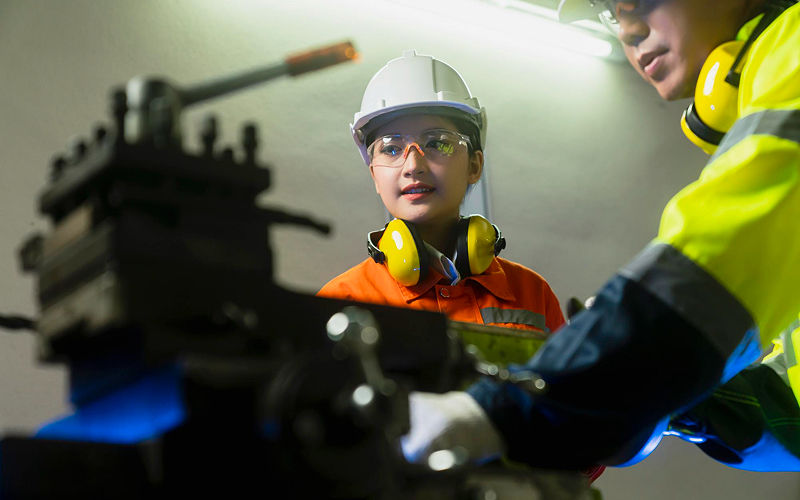
To maintain reliable manufacturing outcomes, organisations must translate structured engineering principles into practical operational systems. This section outlines how disciplined processes are implemented within a real production environment to support consistent execution across complex programmes.
Formalising Engineering Interpretation
At Disk Precision Group in Thailand, process discipline begins with ensuring that engineering interpretation is clearly structured and documented from the earliest stages of programme development. When new components are introduced, assumptions about datum hierarchy, machining sequence, and inspection reference points are systematically surfaced and evaluated.
By formally documenting these decisions, the company ensures that manufacturing intent remains aligned with customer specifications and functional requirements. This approach reduces ambiguity during production ramp-up and helps prevent the gradual accumulation of production risks that can occur when interpretation logic remains informal.
Documentation Used to Maintain Execution Consistency
Structured documentation plays a central role in maintaining consistent execution across production teams. Standardised work instructions define key operational parameters, including setup procedures, machining sequences, and inspection checkpoints. These documents help ensure that each production batch follows the same validated process logic.
Engineering change logs are also maintained to track revisions, including the rationale for each update and the effective date of new requirements. Control plans further outline critical characteristics and process checkpoints that must be monitored during production. Together, these systems provide the transparency needed to maintain consistency across complex manufacturing programmes.
Review and Governance Cadence
Maintaining alignment between documented intent and real production execution requires regular review. At Disk Precision Group in Thailand, periodic process reviews help confirm that production practices remain consistent with the approved engineering framework.
Milestone-based reviews are also conducted during key programme phases, including volume ramp-ups, engineering updates, or major schedule transitions. These checkpoints enable teams to assess whether changes have been implemented consistently and to identify any additional adjustments needed to maintain stability. In doing so, these governance structures play a key role in reducing operational issues in long-running manufacturing programmes.
Supporting OEMs Across Key Industries
Disk Precision Group in Thailand supports OEM customers across several demanding industries, including aerospace, electronics, and industrial equipment manufacturing. These industries require suppliers that can consistently deliver complex components with tight tolerances and reliable production performance.
By maintaining disciplined manufacturing systems, the company provides reliable precision machining solutions that support long-term programme stability. Whether producing components through multi-axis machining or integrated metal fabrication, maintaining structured execution logic helps ensure complex production environments remain stable and predictable.
Supporting OEMs Through Operational Continuity
Operational continuity is particularly important for OEM customers who rely on stable supply chains across multiple global markets. Disciplined processes allow Disk Precision Group in Thailand to maintain consistent output even as programme complexity increases or production volumes fluctuate.
By reducing uncertainty and maintaining clear engineering logic across teams, these practices help minimise hidden costs associated with rework, delays, or investigation. Over time, this operational reliability plays an important role in preventing avoidable production risks and strengthening long-term partnerships with OEM customers operating in Thailand’s advanced manufacturing sectors.
Questions You Might Ask
Why do production risks still occur even when machining accuracy is high?
High machining accuracy confirms technical capability at a specific point in time, but production risks are shaped by repeated execution over extended periods. Inconsistent interpretation, undocumented assumptions, and subtle variations introduce instability that may not be immediately visible, often surfacing later during audits, assembly, or functional use.
Can inspection alone prevent costly manufacturing issues?
Inspection detects deviation but does not address the upstream conditions that create it. When risk management relies primarily on inspection, underlying process weaknesses persist. Stable outcomes depend on disciplined decision-making and execution frameworks that reduce the likelihood of deviation occurring.
How does process discipline affect total manufacturing cost over time?
Process discipline reduces long-term cost by minimising rework, scrap, unplanned adjustments, and late-stage corrective actions. By stabilising execution and controlling variability, manufacturers avoid hidden costs that accumulate gradually and undermine delivery performance and trust.
Conclusion

In precision engineering environments, production risks are seldom the result of isolated mistakes. They are more often the outcome of how consistently engineering intent is interpreted, documented, and executed across the production lifecycle. Even when machining capability, inspection systems, and technical expertise are strong, small differences in decision logic can gradually influence production stability.
This is why disciplined engineering processes are essential in precision manufacturing. When decisions are clearly recorded, aligned with documented intent, and executed consistently across teams, organisations can move from reactive correction to predictable performance. Structured governance enables manufacturers to manage complexity more effectively, especially in programmes characterised by tight tolerances, high volumes, and long operational lifecycles.
For OEM customers, this stability directly affects cost control, delivery reliability, and long-term programme confidence. Consistent execution reduces the likelihood of late-stage corrections, unexpected rework, or operational disruptions that may otherwise arise during complex manufacturing.
Through structured engineering governance and disciplined execution, Disk Precision Group in Thailand supports precision manufacturing programmes that remain stable even as technical complexity, production volume, and programme duration increase. By focusing on documented decision logic and consistent operational practices, the company helps manufacturers maintain stronger control over production risks throughout the entire production lifecycle.
If you are reviewing or planning a precision manufacturing programme and want stronger visibility and control over potential manufacturing challenges, consider engaging Disk Precision Thailand. Their experience in disciplined precision manufacturing operations can support programmes that require consistent performance, stable production outcomes, and reliable long-term execution.


ความคิดเห็น